Bea and Víctor’s Romance and Engagement
Gente que viene y ¡Bah!Bea and Víctor’s Romance and Engagement traces a relationship from three years of shared domestic and professional life to a proposed marriage, a public betrayal, and an uncertain breakup whose causes neither partner can reduce to a single version. Its decisive turn is not simply that Víctor becomes involved with the TV News Presenter: Bea’s own retrospective account recognizes that her anger, his attempt to explain himself, and the practical motives behind his proposal all helped shape how the engagement ended. The romance that had seemed secure enough to plan a wedding becomes a story Bea must repeatedly narrate, defend, and watch others retell.
A shared life and a pact
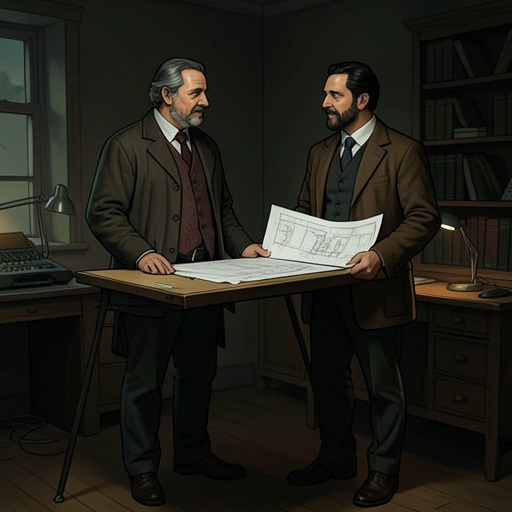
Bea and Víctor had lived together for three years and worked at the same architecture studio. Víctor was especially effective with clients: his natural charm helped him win the confidence of Bea’s bosses, who soon brought him into project presentations and negotiations. His persuasive manner had been cultivated early. His father, a traveling cosmetics salesman, took him along to work during holidays, and Víctor learned to use seduction and argument in many areas of life. Bea, by contrast, describes herself as distrustful, quick to anger, and less immediately at ease with new people. Their differences are not presented as the whole explanation for the breakup, but they establish a contrast between Víctor’s ease in winning people over and Bea’s resistance to being persuaded.
The couple also had a supposedly modern agreement: each named five famous people with whom an encounter would not count as a betrayal. Bea’s list included actors, a model, and an athlete; Víctor’s included actresses, models, and a TV presenter. They had imagined the possibility as remote and treated their pact as a sign of sophistication. In retrospect, the agreement becomes an ironic prelude to the crisis: Víctor did meet and become involved with the presenter on his list. The pact explains how the possibility entered their private conversation, but it does not settle what the relationship meant or excuse the shock of Bea encountering them together.
The proposal and the wedding plans
The engagement began during a celebration organized by the architecture studio’s bosses after years of small projects and unsuccessful competitions. The office had finally secured a major opportunity connected with Stockholm, and the coming visit from the Stockholm team was to be marked by a large party. In that atmosphere of professional optimism, Víctor proposed with a ring. Bea says she had never particularly wanted marriage: she had no longstanding dream of a white dress, a planned ceremony, or bridesmaids. Yet the proposal overwhelmed her with happiness, surprising even herself.
Their preparations soon turned that unexpected joy into a series of comic excesses. They declared that a discreet wedding would have no more than one hundred guests, then invited 215. Bea insisted that spending more than 800 euros on a dress would be absurd, but paid 2,853 euros instead, without even receiving a small reduction. She also denied being someone who flaunted her engagement, while admitting that she repeatedly displayed the ring under the pretext of doing so casually. These details make the engagement tangible: before it collapses, the wedding is already a public performance Bea both mocks and relishes.
Discovery and the competing accounts of the breakup
At a celebration at Casino de Madrid, Bea searched through the venue and recognized Víctor by his back, despite his unusual formal clothes. She approached expecting an explanation and saw him just after he had kissed the TV News Presenter. Her earlier confidence in a harmless misunderstanding vanished. In anger, she took the engagement ring from her bag and confronted him with it. The ring, introduced as the sign of a proposal that had made her unexpectedly happy, now marked the breach between them.
The first version Bea gives is blunt: Víctor left her for the presenter less than two months before their wedding. She then qualifies that account. The circumstances were more complicated, she admits, and Víctor might have said that Bea had pushed him toward the presenter and ultimately ended the relationship herself. She does not call that version a lie. This correction is central to the relationship’s portrayal: the betrayal is clear, but responsibility for the breakup is not presented as a simple verdict delivered by an impartial narrator.
When they return home, Bea confronts Víctor about the kiss and asks why he proposed. He answers that he loves her and wants to marry her. He also reveals a practical motive: he knew he was unlikely to lose his own job, and thought marriage might make the studio less willing to dismiss Bea. The explanation does not erase his stated commitment, but it makes the proposal carry two kinds of meaning at once, emotional and protective. Later, he insists that he wants to marry only Bea and that she matters more than anyone on his celebrity list. Bea is moved by his persuasive declaration and briefly responds to him, then regains her resolve. The scene leaves both the strength of his appeal and her distrust of it in view.
Cancellation and the public afterlife of the romance
Bea ends the wedding plans in an impulsive, highly visible way. At Chavela’s computer, she emails everyone in the wedding guest group to say the ceremony is canceled, blaming circumstances beyond her control but not beyond her fiancé’s. She does not reread the message before sending it. She then tells Víctor she will collect her belongings from their apartment the next day and warns him not to be there, threatening to call the police if he is. The relationship ends not through a calm joint decision but through a sequence of abrupt communications that make the breakup difficult to keep private.
It later becomes public again when a hidden-camera segment features a hotel receptionist describing Bea’s entry into Víctor’s room. The footage shows a blurred, oddly framed man in a black-and-gray uniform; Bea recognizes the receptionist’s voice as he discusses the presenter, Víctor, and the woman who had entered claiming to be Víctor’s ex. His account says she threw a shoe to keep him from approaching and that neither guest left during his shift. The television exposure turns a private confrontation into material for gossip and makes Bea’s former relationship a public identity.
A national profile expands that exposure, identifying Bea as the ex of the presenter’s boyfriend and recounting that she and Víctor had nearly married before the presenter entered the picture. It also places the romance within the larger story of Bea’s family: her mother’s local reputation, Irene’s divisive mayoralty and support for a biomass power project, and Débora’s separation from Juan. The relationship is thus recast as one strand in a supposedly sensational family portrait rather than a private history between two people.
The media story returns at a demonstration, where Bea publicly confronts the presenter. She draws hours of attention on heartland television and gossip programs, but cannot divert the crowd from its opposition to the power plant. The publicity contributes to Emerge abandoning its agreement with the Andrada family, a development that threatens Diego’s finances. The consequence shows how far the story has traveled from its beginning: Víctor’s betrayal and Bea’s response become part of a media spectacle whose effects extend into village politics and another person’s livelihood. The romance remains unresolved not because its key events are hidden, but because every account of them—Bea’s, Víctor’s, and the media’s—places responsibility and meaning differently.